Mr. Wickfield's decline and dependence on Uriah Heep
David CopperfieldMr. Wickfield's decline is a gradual loss of physical steadiness, confidence, and authority, culminating in a household and business life increasingly shaped by Uriah Heep. The change is especially stark because Mr. Wickfield retains the signs of his former standing and because his daughter, Agnes Wickfield, can still draw him briefly back toward his earlier self. His dependence is therefore shown not only as a transfer of power but as a painful separation from the relationships that once gave his life warmth and order.
The Shape of the Decline
When Agnes Wickfield visits David Copperfield in London, she explains that Uriah Heep and his mother now live with her and Mr. Wickfield. Heep sleeps in the room David Copperfield once occupied, while Agnes has kept the small panelled room where she used to study. These domestic arrangements make Heep's new place in the household tangible: he has entered the private space of the family, while Agnes preserves a separate, familiar corner of her own.
Agnes describes Heep's presence as an obstacle between her and her father. She cannot be as near to Mr. Wickfield or watch over him as closely as she wishes, because Heep is so often between them. Her concern is not merely that the household has changed. She fears that her father's vulnerability leaves him exposed to possible fraud or treachery, though at this point she expresses that danger as a hope and fear, not as a proven charge.
A Partnership Reversed
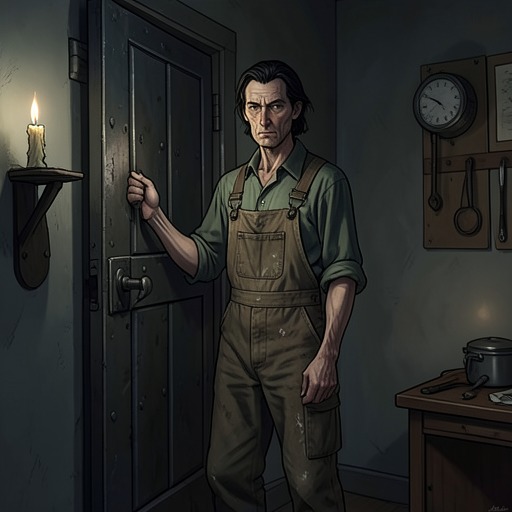
The change becomes unmistakable when Mr. Wickfield arrives with Heep to see David Copperfield and Betsey Trotwood. Mr. Wickfield still dresses with his characteristic care and retains his gentlemanly bearing, but David Copperfield notices his unwholesome flush, bloodshot eyes, and trembling hand. He recognizes the tremor as connected to a cause he has watched for years. The bodily signs of decline contrast with the older man's surviving dignity, making his submission to Heep more painful to witness.
Their business partnership has become an inversion of their apparent characters and former positions. Heep is active in the firm and presents himself as a source of relief from business fatigue; Mr. Wickfield, in a dull and forced manner, affirms Heep's account and says that having him as a partner is a burden lifted from his mind. Heep's show of deference does not conceal the imbalance from David Copperfield: Heep watches him while Mr. Wickfield speaks, and his smile suggests that he knows the performance is being observed. Mr. Wickfield's own bowed posture on entering briefly registers his awareness of the dependence, before Agnes's greeting draws him into the room.
The Household and Agnes's Vigil
Heep's influence extends from the firm into family life. Agnes must endure the company of Mrs. Heep when she would rather be alone; she says that Mrs. Heep's praise of her son can tire her, while acknowledging that such praise is natural from a mother. Agnes does not appear to recognize Heep's designs on her, and her gentle frankness remains unchanged in David Copperfield's presence. That innocence sharpens her worry about her father: she sees the distance Heep has created between them, even as she continues to hope that love and truth will prove stronger than misfortune.
Her care takes practical as well as emotional forms. When she, David Copperfield, and Mr. Wickfield spend time together, Agnes sits beside her father and pours his wine. He takes what she gives him and no more. The small, measured gesture contrasts with the earlier signs of his deteriorating condition and shows the care Agnes continues to provide without claiming that she can undo the decline. Afterward, she pillows his head as he rests, and David Copperfield sees tears in her eyes when she returns to the window.
Temporary Return and Lasting Depression
Away from Heep, Mr. Wickfield becomes more like his former self. Recalling the pleasant days in Canterbury with Agnes and David Copperfield brings him evident pleasure; he remembers many of the incidents they discuss and wishes that life had not changed. Agnes's quiet presence and touch appear to comfort him. The improvement is real but limited: a settled depression remains, and the scene offers no indication that his dependence on Heep has ended. His recovery of ease occurs within an affectionate gathering, not through a restored position in the partnership or household.
This contrast makes the decline more than a portrait of physical illness. Mr. Wickfield can still respond to familiar memories and his daughter's devotion, but his authority and independence have been compromised. Agnes's attention gives him a temporary refuge from the arrangement in which Heep speaks for him and stands between father and daughter; it does not remove that arrangement.
Narrative Significance
David Copperfield's account makes the reversal central to the meaning of Mr. Wickfield's decline. He sees a man who retains signs of innate superiority submitting to someone he regards as mean, and experiences the changed balance of power as degrading. Yet the narrative also shows Mr. Wickfield as more than a passive emblem of defeat: his pleasure in remembered Canterbury days and his responsiveness to Agnes remain visible, even under the weight of his depression.
Agnes's role links the private and professional consequences of Heep's influence. She recognizes that her access to her father has narrowed, watches over him as best she can, and sustains a bond that briefly revives his former manner. The scene's emotional force lies in the difference between that renewed family intimacy and the continuing dependence that awaits him beyond it. Mr. Wickfield's decline is therefore presented as an erosion of health and agency, but also as a condition whose effects are partly resisted by memory, affection, and Agnes's persistent care.